Saturday, May 30, 2009

Walking the Bible

So, I´m leaving the Negev. But before I go I want to note one last biblical observation. Writing that comes from a culture that is both foreign and ancient is difficult to grasp. Two things help though: learning the language and living in the environment. Yet no matter what we do, the bible can still baffle us. That's why it's so satisfying when something just clicks.

A few weeks ago I spent a day at a near by Kibbutz, just a few km down the road. It was a hot day and I walked for hours in the desert wearing flip-flops. I walked quite a bit off of the path, in the sand and dirt of the Negev. When I got home and sat down, I was suddenly overcome by a powerful urge - to wash my feet. Sure they were dirty, but my feet have been dirty before. But this was different. It was a strange sensation: as if they were covered by a thin film of very fine dust and dirt. It was kind of tingly and rather irritating.

So off to the bathroom I went, and with foot in sink it hit me. Abraham, angels, Genesis 18... foot baths!

In the Tanach תנ"ך or Hebrew Bible there are eleven references to washing ones feet. I always wondered what this obsession with foot baths was. Why does Abraham, upon seeing angels/visitors, immediately offer water for feet washing? We've all gone around barefoot at one point or another, but the bible makes it seem so urgent, as if one can't relax until the feet are clean. And that's pretty much right on. After I toweled down my toes I felt like a new man.

Ever since, I've had a new understanding of all the biblical feet washing. Song of Songs 5 sums it all up: I have washed my feet— must I soil them again? Amen.

I'll miss the desert though - quietude, warm sun, cool breezes and starry nights. I'll miss walking a few minutes from my door, climbing a small hill and being in the open with a view that stretches on to the horizon.

And yet, driving back last night from Haifa, my soon to be new place of residence, I looked out the window and saw the sun just touching down on the Mediterranean Sea.

You could almost here it sizzling. On my left were the craggy foothills of Mount Carmel where Elijah confronted the prophets of Ba'al. Perhaps there will be more little insights into the book that spawned history. And if not, at least I'll enjoy the view.

FYI, no I did not take these pictures. Sorry. But I still wanted some visual representation of the locations mentioned.

For those interested go to biblegateway.com and search feet and wash together.

Friday, February 27, 2009

יפו - Jaffa - يَافَا

Yafo's name comes from the Western Semitic root for beauty. It is one of the oldest ports in the world and lives up to it's etymological origin. Note that all three versions of its name (Hebrew/English/Arabic) are pronounced slightly different - just to confuse you a bit.
On a recent stop there, while standing at the seawall and staring out at the Mediterranean, I was startled by the call of the muezzin. Camera in hand, I captured the following scene.


Turn your volume down a bit before you hit play

I'm in no way making a statement with this video. I just happened to be standing around with a camera as this scene unfolded. I like it for its East meets West, slice of life in Israel quality.

Sunday, February 22, 2009

לֹא תִגְנֹב or Additions and Corrections

So said God, Exodus XX:13, Don't Steal! - or really, you will not steal. It's right after don't murder and don't commit adultery. I should have listened.

Alas! I went astray, and in a moment of weakness downloaded a program crack for some music notation software. Woe! t'was a great and terrible plague that was released upon my laptop - an irremovable rootkit virus. It seems that the Lord-God has updated his repertoire of punishment for 58th century cyber-crime (it's the year 5769 according the the Hebrew calendar.) A full system restore was in order, but first I needed to travel from my far off village to the nearby settlement of Be'er Sheva באר שבה in order to acquire CD R's for file saving.


A day's journey by camel, or 25 minutes by bus, Be'er Sheva is found in the northern Negev and is the capital of our region. Upon arrival I realized that I wasn't the only one out here in the desert making stops at Pirate Bay. It seems the whole district was in need of a little discipline. But God isn't strictly techie these days. He still has a taste for some old school wrath. So, a plague of sand was unleashed upon the southern residence for their transgression of downloading pirated software.


This is the sun.


Walking outside in a sand storm was an interesting experience. You get sand in your eyes, mouth, ears, nose and hair. Even in the mall, where I sought refuge to wait out the storm, sand was everywhere. So lesson learned: Don't be cheap. Pay for the software or be wary. Next time it could be frogs.


After don't steal there is another order לא-תַעֲנֶה בְרֵעֲךָ עֵד שָׁקֶר. Something like: you will not answer on your fellow man in the manner of a lying witness. But now that I've got some old fashioned fear of G-d in me, I'll play it safe and say “Don't lie!” As such, allow me to correct some previous entries.

On 18.12.08 or 12/18/08 (that never stops being confusing) I published a post entitled “Porcupine Slippers.” It has since come to my attention that there is an error here. I thought the Hebrew word קיפוד Kipod was porcupine. This turns out to be incorrect, mostly. It seems that Kipod is really hedgehog while Darban דַּרְבָּן is porcupine. While many Israelis use Kipod for both, those that wish to speak correctly make a distinction. Of course those that make a distinction say Dorban which is really a spur or quill while Darban is porcupine. Though, it seems to change according to which dictionary you use. I've checked several for both animals. Some have both listed under Kipod while others have only hedgehog. Also, a “Sea Hedgehod” קיפוד ים is a sea urchin and an “Ant Hedgehog” קיפוד נמלים is listed as a porcupine anteater aka. an echidna – a creature that looks like the result of an inter-species orgy between a porcupine, hedgehog and anteater. The name Echidna comes from Greek mythology - she was the mother of all monsters and spawned every major horrible monster in the Greek myths. Finally, Kipi's true roots are reveled.

The other subject I'd like to address is of course beer. In “Booze and Don't” I implied that there are only two Israeli beers. This is not correct and there are two more I must mention – again, one positive one negative. First there is “Shandy” שנדי, a lemony girl drink if there ever was one.

I think it's a blend of Maccabee, Sprite, and camel piss. It contains 2% alcohol. That makes 3.2 beer look like a Belgian trippel. Honestly, just get a lemonade if that's what you really want. It's more respectable than pretending like you're really drinking.

The other is נשר or Eagle Beer. This is cheap swill, which I like. Probably because I'm cheap. For around $1.00 or ₪4.00 you can buy a half liter bottle which you can drink anywhere you like. No open container laws here. I like to drink beer at the mall or at the bus station, give's you something to do while your waiting. Just try and keep the sand out.


Monday, January 19, 2009

A quick one

So the battle is over. Don’t be fooled into thinking that was a war. The war has been going on for years now and shows no signs of stopping. Thought I plan to write about how the situation looked from 20km outside of rocket range, a subject like that requires a little time to settle.


So in the mean time I will present you with this:


A three legged saluki wearing a neon ski jacket – with a hood! (Look again, yes, that’s his tail) OMG, kibbutzim are weird places.

Three legs and he's still the fastest dog on the kibbutz.

Sunday, December 28, 2008

Quality Entertainment

Once, a friend of mine revealed to me an indisputable truth: when you're abroad, you'll watch anything that comes on TV - as long as it's in English. Though I must to concur, allow me to expand a bit. I'm not talking about vacation here. I mean when you're overseas for a period of time - when you're immersed in another language and culture. It seems some internal mechanism increases your tolerance for ridiculousness, so long as it's from a familiar culture or language. A few examples:


I watched way more of this movie than I'd like to admit. Yes, that's Willie Nelson in the background there, playing Uncle Jessie. Oh Willie, you wrote "Crazy." How low you've sunk. Let's continue...


Synopsis: Chris Farley and the effeminate guy from friends are pioneers in the American frontier. Hilarity ensues. I lost 5 IQ points with this one.


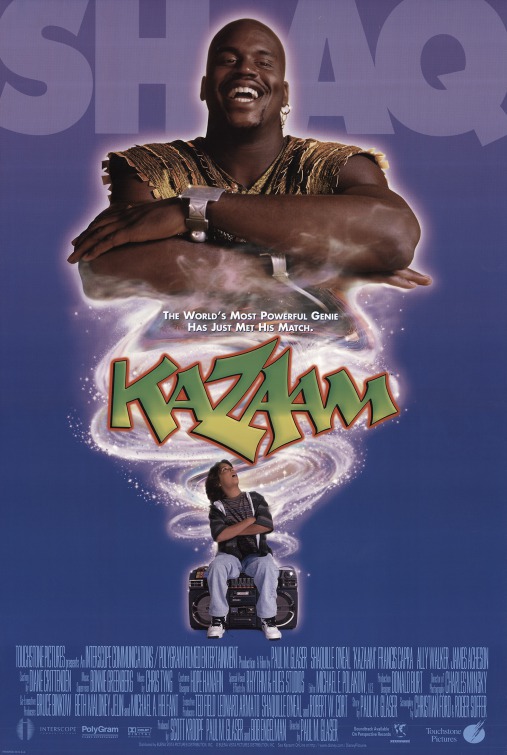
Last and indeed least we have Kazaam. "This film misses more than Shaq at the free throw line." The reviewer continues, "
Everything about this film is simply horrid, and I can't fathom it would find an audience anywhere." He obviously wasn't thinking about expat Americans flipping around at 2 in the morning.


Two questions arise here. First: Why is this crap on Israeli TV every night? For this I have no guess, though and can tell you it's giving foreigners a warped sense of American culture. The world already thinks we Yanks are a bit dull, and Shaq-Fu over here isn't really helping.
Second is why? Why am I able to watch the stupendously vacuous output of Hollywood where normally I can't tolerate one second of it? Perhaps it's the mind numbing effect. Living in a new language is a real challenge to the brain. All interactions require extra effort. By the time the evening comes around, you're ready to just pull the plug on mental activity. That's where John Goodman dressed as Santa comes in. Oh! and did you know that Kid 'n Play made a movie? Behold Israel - The High Top Fade!

Thursday, December 18, 2008

Porcupine Slippers


I received my Teudot Zehut or National ID card a few days after landing in Israel (don't worry, I chopped out any identifying info). It was a proud moment for me. After 2,000 years of exile, the children of Israel were again a free people in their homeland. I was honored to represent my lineage in the land of Jewish sovereignty. Yet little did I realize that my marker of Israeli identity, though seemingly official, was less than complete. It seems that one indicator of my national status was still missing.

That was until I received a gift.

Yes, these indoor shoes are the real mark of a new immigrant in Israel. Called Na’alei Kipi נעלי קיפי, these outwardly ridiculous, yet surprisingly useful and comfy slippers now complete my absorption into Eretz Yisrael. In fact, when I first wore them, three different people said to me "Oh, now you're really Israeli!"

Allow me to make a few assumptions as to explain the popularity of this item. First, Israelis have yet to discover insulation. Though my concrete box of an apartment could withstand a rather powerful blast, it is quite bad at regulating temperatures. This, coupled with the slate flooring (sand a rugs don’t mix) makes for chilly foot conditions. So goes my hypothesis on my new footgear - but where does the name come from? Glad you asked.


This horrifying creature is call Kipi Ben Kipod קיפי בן קיפוד or Kipi son of Porcupine, and I’m told he is a popular character on Israeli Sesame Street – Rehov Sumsum רחוב סומסום. Have a look these pictures and notice that he (apparently it’s a male) wears this style of slipper.

Also notice that this is the scariest thing you've ever seen on Sesame Street.

See the look of shock and fear on this young man’s face as he stares, paralyzed with fear into its soulless eyes.

Even Israel’s Oscar the Grouch winces, wide-eyed with terror, under the looming shadow of this ghastly figure.


So why did the creators of Rehov Sumsum choose such an appalling beast to teach kids about squares and the number 8? Perhaps to traumatize them early, so as to toughen them up for later in life. Most of these kids are going to serve in the army. We can’t have the defenders of the country running around, scared of their own machine guns. This is Israel after all. Not a day goes by without somebody trying to kill us. No time for sissies – and that goes for the girls too!

In all seriousness, Israeli Sesame Street does try awfully hard to teach the children well. There are always segments about making peace, respecting other cultures and embracing differences. Israel’s Arab population is represented and characters are always viewed in the positive spirit of egalitarianism. Jim Henson would be proud. It's also pretty funny. Here is a clip that I’ve translated into English and added subtitles to. Sorry for the crude, no-budget quality. Freeware.


So what’s going on in Hamas’ Gaza…


What’s that Mustafa Mouse, Jews are the sons of pigs?


72 little Minnies, just waiting up there for him.

Monday, December 8, 2008

Booze and Don't

Being new a new immigrant in Israel, I have a lot of free time. I’m often making all kinds of cultural observations that would be good to write about. Problem is, most of these are made on the bus and I forget what they are. So until I get a notebook I figured I’d write about a subject close to my heart – one I feel comfortable writing about. Something sure to get the creative juices flowing.

If you ever come to Israel, you should acquaint yourself with the local beer. There are two notable mass-produced Israeli beers. These are Goldstar גולדסטאר and Maccabiבירה מכבי . Both are pale lagers at 4.9% abv (wikipedia), but the two beers are quite different in taste. Maccabi is the real Zionist beer – mostly cause of the name. I picture Judah Maccabi reclaiming the Temple and then cracking open a pounder. It’s gold in color and light in taste. There’s nothing really wrong with Maccabi – it’s just your average yellow beer.

Goldstar is what I would call an amber lager(not a pilsener), though the bottle says Dark Lager Beer. It’s best from the tap. It has a smooth creamy texture – almost like from a hand-drawn tap. The flavor is subtle; a little sweet, a little spicy and a mild finish. In short, if you find yourself in a bar in Israel, drink lots of Goldstar. It’s a very tasty beer, and certified kosher of course.

But not all beer in Israel is what it appears to be…

Have a look at this.

Looks like beer, right? It’s with all the other beer in the grocery store. It’s listed with all the other beers on a menu. Has to be beer. Well it’s not. Israelis call it Malt מאלט and I still can find a purpose for its existence on the planet. It’s brown, thick, sweet and without any alcohol. And it’s posing as a perfectly normal beer. I would say it’s children’s beer, but that’s what Maccabi’s for.

Anyway, steer clear of this stuff. And be extra careful of the diet version. Yes, diet non-alcoholic beer.


I guess you take the good with the bad in a new country so now I’ll close with one of my favorites. Arak ארק is a clear, colorless, unsweetened aniseed-flavored distilled alcoholic drink, produced and consumed in the Eastern Mediterranean countries, Syria, Lebanon, Israel, Iraq, and Jordan. Thanks Wikipedia. It’s kind of like Sambuca but not as thick. If you get a bottle of Ouzo, that’s pretty close. In Israel, Elite Arak is 40% abv and Arak Aluf (champion arak) is 50%.


This is how I prepare it.


Notice the change in color from clear to milky-white.

Like so many things in the Middle East, arak is meant to be enjoyed slowly. Sit in the warm sun or cool shade, sip on a cold glass of arak and stare out at the sea. It’s something all the people of the region can agree on. Of course, most of the neighboring population is Muslim and forbidden to drink alcohol – There’s a devil in every berry of the grape (The Qu’ran) Oh well, more for me. Le’chaim!